
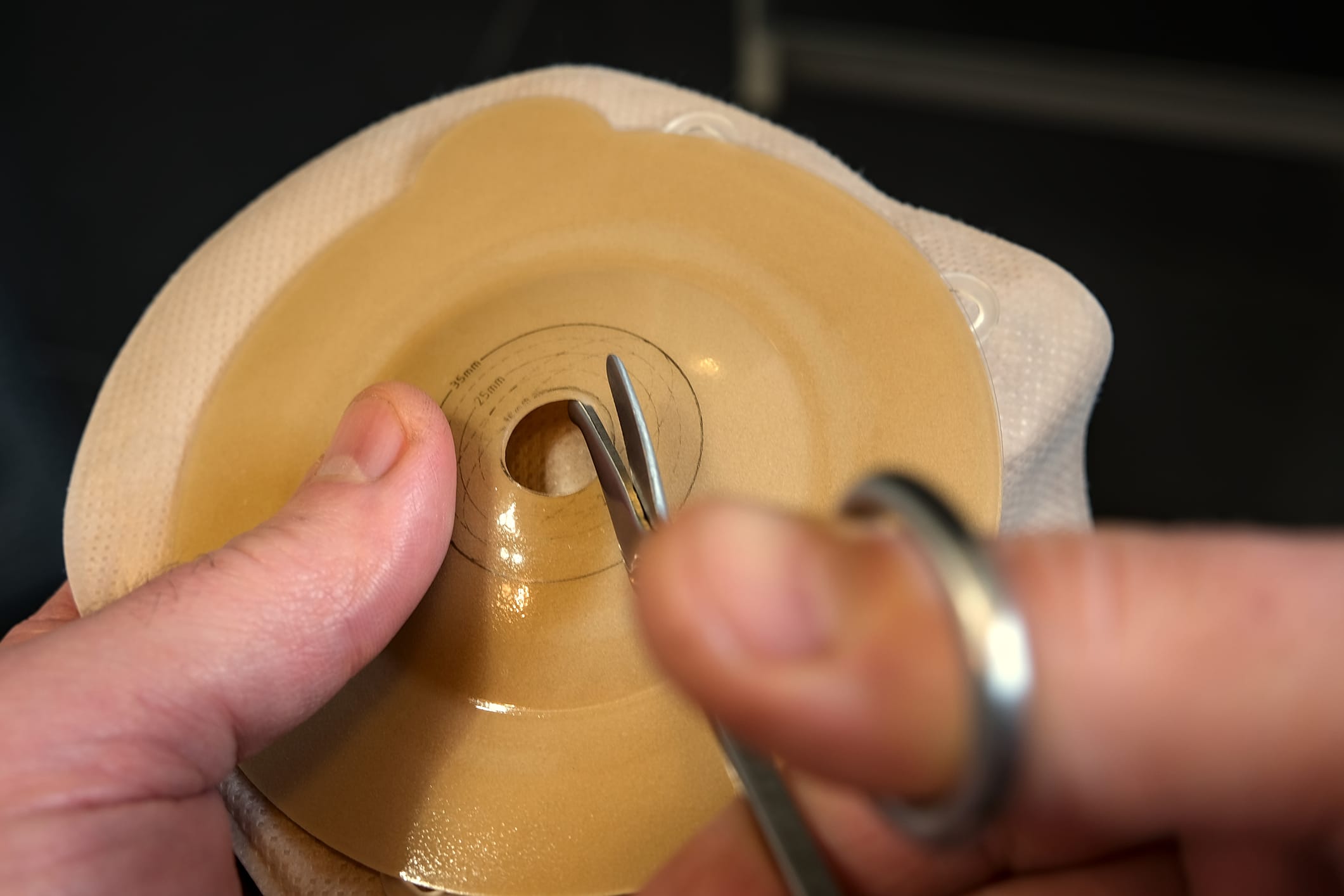
After bladder removal to treat bladder cancer, an ileal conduit creates an alternative pathway for urine to leave the body. An ileal conduit a simple technique with a low risk of complications that allows you to live a normal lifestyle — but that doesn’t mean it’s not a big adjustment. These tips can help as you learn to live with an ileal conduit and pouching system.
What is an ileal conduit?
An ileal conduit is a method of urinary diversion after the removal of the bladder. It connects a piece of your small intestine called the ileum to the ureters on one end, and an opening on your body called a stoma on the other. Urine can then exit the body through the stoma and collect in a detachable pouch that adheres to the skin.
Read more about bladder cancer treatment and care
Tips for living with an ileal conduit
Living well with an ileal conduit will take some adjustment at first, but it won’t take long for you to feel more at ease with your stoma pouch.
After surgery, an ostomy nurse will guide you in how to care for your stoma and the pouching system. They’ll cover how to empty and change the pouch, use a nighttime drainage system, your pouching system options and other changes to your daily routine.
Here are a few tips for settling into life with an ileal conduit.
Protect the skin around the stoma
The stoma pouch is attached to the skin, and it is important to protect the skin around the stoma by gently cleansing the area with water and fragrance-free mild soap. Rinse carefully to ensure there is no soap residue that may cause irritation. Pat the area dry.
Don’t use oils or lotions on the skin near the stoma; these can prevent the adhesive from sticking.
Knowing when to empty and change the pouch
You’ll need to monitor your pouch and empty it when it’s a third full. This means emptying your pouch six to eight times per day. It’s generally recommended to empty the pouch before physical activity, before bed and before going out.
The wear time of a stoma pouch varies from person to person; your activities, climate, specific pouching system and more are all factors. Generally, though, you’ll need to change your pouch every three to five days.
Adjust clothing
Avoid wearing a tight belt or pants that are tight near the stoma; these can injure the stoma, and prevent urine from entering the pouch.
Wearing an undershirt (if your stoma is above your beltline) or supportive undergarments (if it’s below the beltline) can help cover and support your pouching system. Pouching systems generally aren’t very noticeable under clothing, but wearing an outer layer like a sweater or vest can help if you’re concerned.
Bring backups
Always keep an emergency kit with replacement bags and adhesive wafers with you, particularly if you’re traveling. Keep extra supplies in your purse, at work, your gym bag and anywhere else helpful. Keeping supplies in the car is suggested, unless you live in a warm climate (bags can melt in a hot car).
You may want to keep an extra change of clothing with you, especially as you adjust to life with an ileal conduit during the first weeks and months.
Report any complications immediately to your doctor
Potential complications of a stoma pouch include bleeding, urinary tract infections, hernias or stoma prolapse. Contact your healthcare team if you notice:
- Unusual bleeding around the stoma (a small amount of bleeding is normal).
- Pain or swelling around the stoma, especially if you have an elevated temperature.
- A bulge (a hernia) near your stoma that you can’t push back in.
- Your output increases or decreases dramatically.
Sign up here to get the latest news, perspectives, and information about bladder cancer sent directly to your inbox. Registration is free and only takes a minute.