
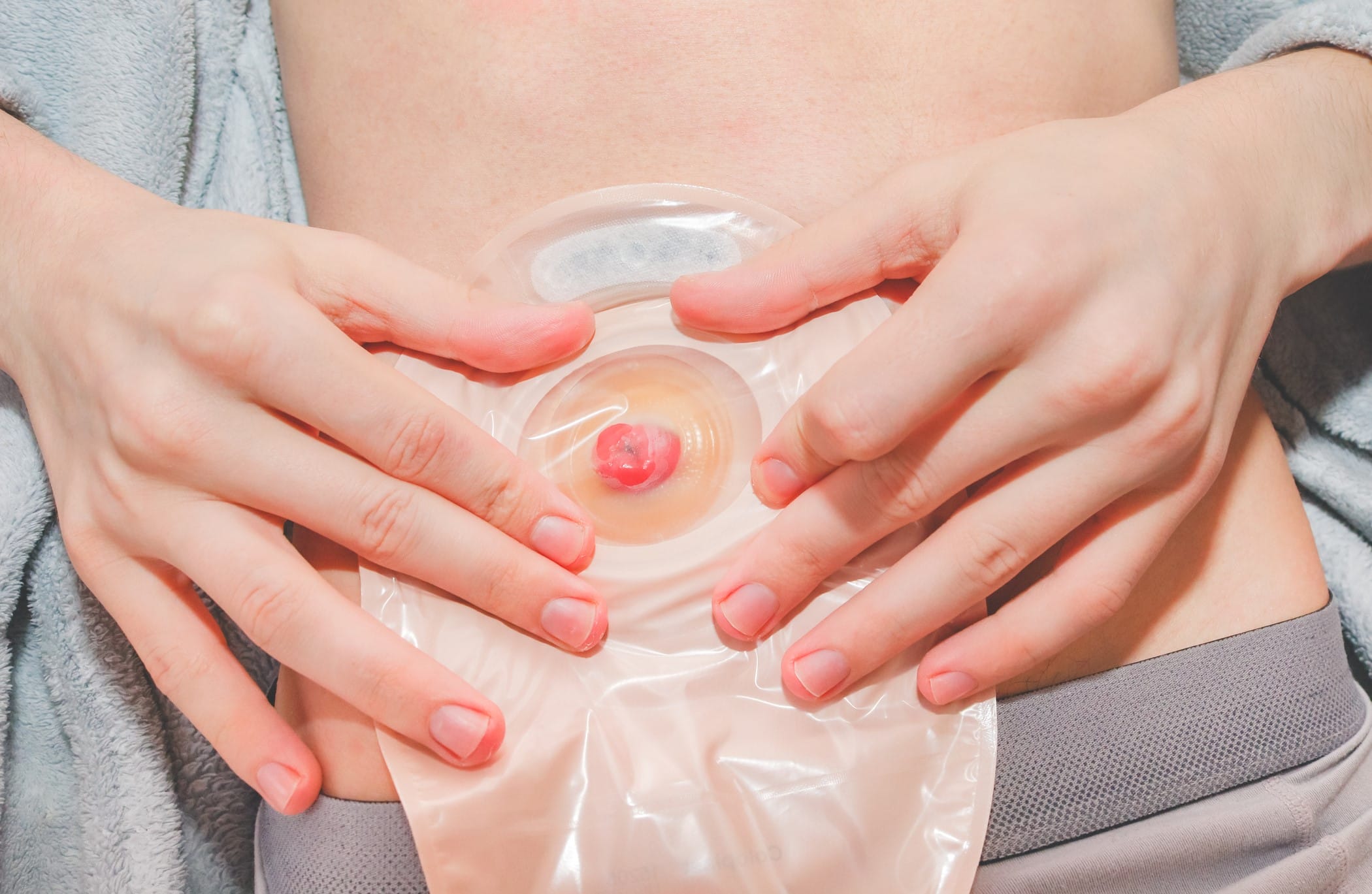
In some cases of bladder cancer, doctors may decide that it is best to remove the bladder from the body, called a radical cystectomy. This is only an option when the cancer has not spread to other parts of the body. Removing the bladder is a preventative step aimed at lowering the risk of the cancer creating more damage.
What happens once the bladder is removed? You’ll still need to pass urine from the body, so your doctors will discuss one or more methods for urinary diversion.
Ileal conduit
With an ileal conduit, urine empties via an opening on your abdomen into a pouch worn outside the body. This pouch is called a stoma bag. This stoma bag will be on your body all the time.
Normally, tubes called ureters link your kidneys to your bladder. In an ileal conduit, doctors use a piece of your small intestine called the ileum to divert urine. One end of the ileum will be connected to the ureters, and the other to an opening on your body, called a stoma. Urine collects in the stoma bag, which can then be periodically emptied.
Many patients find that it takes time to adjust to the new reality of having a stoma bag. However, with help and patience, people usually find ways to adapt.
Continent cutaneous reservoir
An alternative to the above is a continent cutaneous reservoir, also called an Indiana pouch. This method uses a pouch constructed from a section of your intestine to store urine inside your body. Because the pouch is inside your body instead of outside of it, a stoma bag is not necessary. This makes it a more discrete option as you will not have to deal with a bag permanently attached to the exterior of your abdomen.
However, the urine collected in this pouch still needs to be emptied. Like an ileal conduit this method also uses a stoma, but it will have a one-way valve through which a catheter (a thin, flexible plastic tube) is inserted to drain urine from the body. This needs to happen a few times a day. While you can control when to empty your urine, the process of catheterization takes some dexterity. Because you will be inserting an external tube into the body, the risk of complications such as infections is also higher.
Read more about bladder cancer treatment and care
Neobladder
Another option is for surgeons to construct a new bladder from your small intestine. The neobladder is connected to the ureters and urethra. This procedure aims to mimic the function of a normal bladder and prevents the need for a stoma bag.
With a neobladder, you will be mostly able to urinate in a normal fashion, though you will need to learn how to use your abdominal muscles to urinate instead of contract your bladder. Leakages can happen, especially at first. In addition, catheterization may still be occasionally needed.
Deciding on an option
It is important to understand that bladder removal and urinary diversion is only done when it is absolutely necessary. It depends on the location, size and behavior of your bladder cancer. If you have been informed that you’re a candidate for urinary diversion, raise any questions you may have to your doctor so that you will have all the facts you need to make an informed decision.
Sign up here to get the latest news, perspectives, and information about bladder cancer sent directly to your inbox. Registration is free and only takes a minute.