
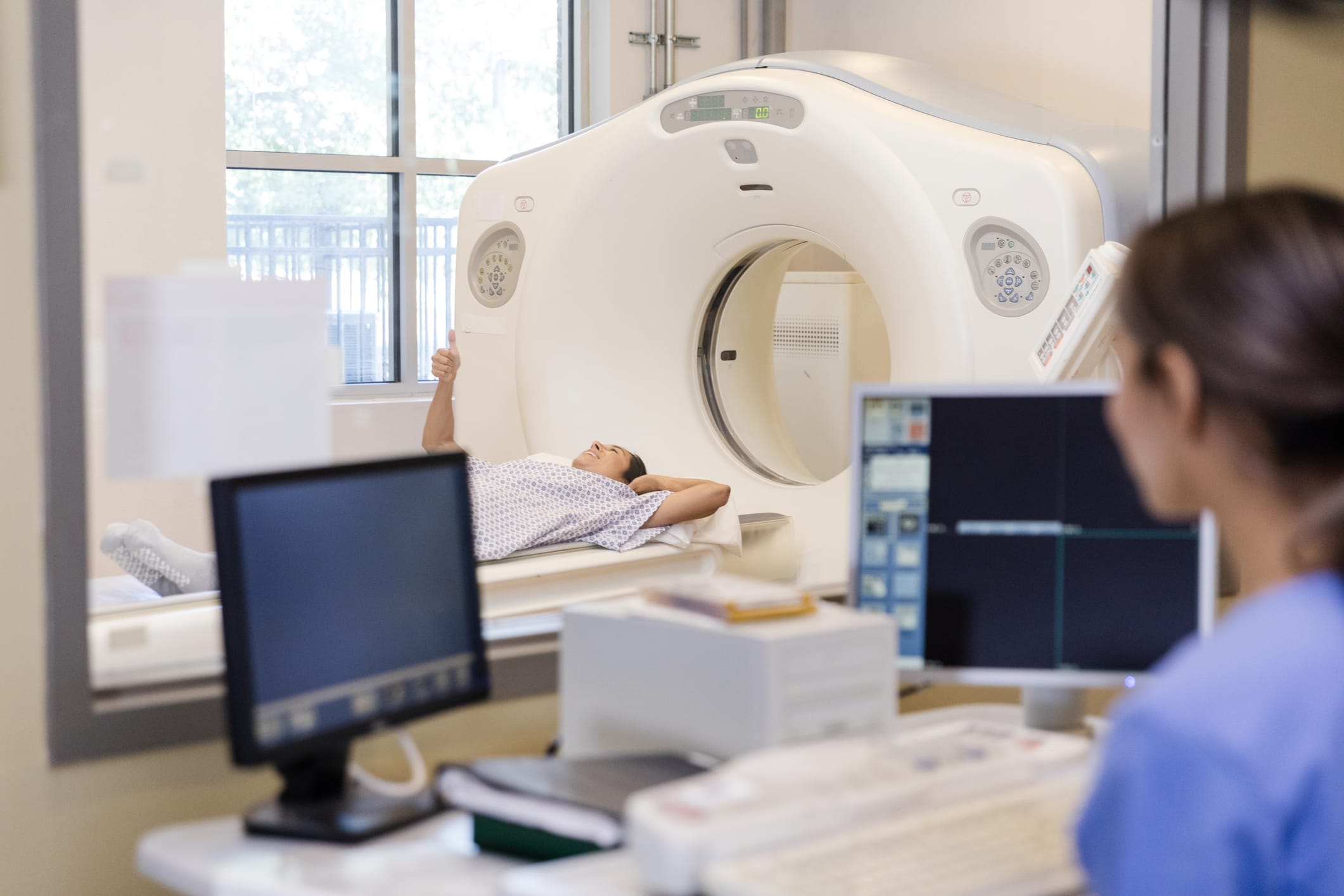
A computerized tomography (CT) urogram is one of many tests you may receive to diagnose bladder cancer. A CT urogram won’t provide a conclusive diagnosis by itself, but it can be an important step in helping your doctors understand the cause of your symptoms. Here is what to expect if your doctor orders this imaging test.
What is a CT urogram?
A CT urogram provides high-definition 3D images of your urinary tract, including your kidneys, bladder and the tubes that connect them (called the ureters). It uses X-rays and a contrast dye to visualize the body’s internal structures in detail.
This test is used to detect and stage bladder cancer, but it can also detect tumors or other abnormalities in the urinary system. It may identify issues such as obstructions, kidney stones, bladder stones, cysts, infections or enlarged lymph nodes.
When is a CT urogram ordered?
If you have symptoms such as blood in the urine, a frequent need to urinate or pain when urinating, your doctor will order a series of tests to find the cause. The first step is often urinalysis, a urine screening test that checks for infections and other concerns; urine cytology, which checks urine for the presence of cancer cells, may also be be done. If your doctor finds abnormalities, imaging is often the next step.
If a mass is detected during a CT urogram, it likely means you have bladder cancer. However, diagnosis needs to be confirmed with a cystoscopy that gives a closer look at the bladder lining and takes tissue samples for testing.
Read more about bladder cancer testing and diagnosis
What to expect before, during and after a CT urogram
Before scheduling a CT urogram, your doctor will order a blood test to check your kidney function. If you have normal kidney function, you will be given the all-clear to receive the contrast dye and the CT urogram can go ahead.
To prepare for your CT urogram, you will need to stop eating several hours before the procedure and drink water to help your bladder expand, which helps create better images. Check with your doctor for clear instructions.
At the start of the procedure, a member of the healthcare team will ask for your medical history, take your blood pressure, temperature and pulse. An IV line will be inserted into a vein in your hand or arm to introduce the contrast dye. When the dye is administered you may feel a hot flush and briefly feel the need to urinate.
The procedure will be performed with a CT scanner, a doughnut-shaped machine that rotates around you as you lie on a table at the center. The machine will buzz and click as it takes images. It’s important that you stay still during the test; the technician can place straps and pillows to make holding still in the right position easier.
When the technician is satisfied with the images, the IV line will be removed and a report will be prepared for your doctor. You shouldn’t have any lasting effects from the dye or scan, apart from a slight bruise at the IV site.
Sign up here to get the latest news, perspectives, and information about bladder cancer sent directly to your inbox. Registration is free and only takes a minute.