
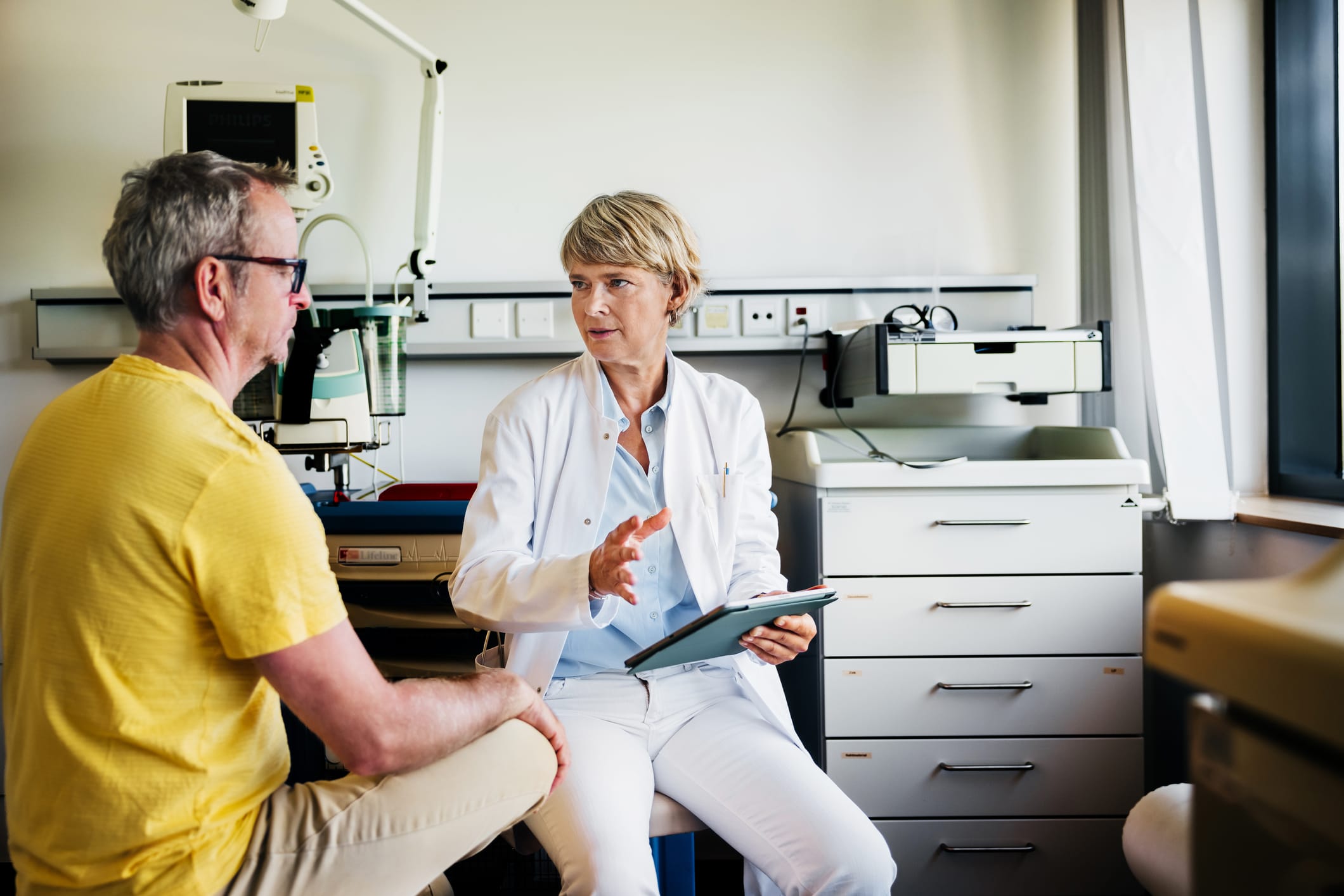
Bacillus Calmette-Guérin (BCG) treatment is a standard form of immunotherapy used to treat early-stage nonmuscle-invasive bladder cancer (NMIBC). NMIBC represents a stage of bladder cancer where the disease is confined to the delicate inner lining of the bladder and has not yet grown into the deeper muscular wall.
The treatment is usually initiated after transurethral resection of the bladder tumor (TURBT), which is performed both to diagnose and to remove visible cancer lesions.
How does BCG work?
BCG triggers your body’s immune system to attack and destroy any remaining cancer cells in the bladder lining.
BCG consists of a live, weakened bacterial strain that was originally developed as a tuberculosis vaccine. It is given intravesically, meaning directly into your bladder.
Preparing for BCG treatment
BCG needs to stay in your bladder for two hours. Proper preparation is essential to ensure the BCG solution remains concentrated and within the bladder during this time.
To prevent diluting the medication, limit your fluid intake several hours before your appointment. You should avoid caffeine, carbonated beverages and diuretic medications until after the procedure.
Read more about bladder cancer treatment and care
What to expect during the procedure
BCG treatment is a straightforward outpatient procedure performed at a hospital or in a clinic. Here is a step-by-step breakdown:
- Administration: A doctor or nurse will gently insert a thin, flexible tube called a catheter through the urethra (the tube that carries urine out of the body) and into the bladder.
- Instillation: The BCG liquid is then guided through the catheter directly into your bladder. Once the medication is inside, the catheter is typically removed.
- The wait period: To ensure the treatment is effective, BCG must remain in contact with the bladder lining for two hours. During this time, you will be asked to avoid urinating.
Safety precautions at home
Though the bacterium in BCG is weakened, it’s still live. This means you must follow specific safety protocols for six hours after each session to protect yourself and others:
- Prevent splashing: To avoid skin irritation or accidental contact with the BCG solution, it is recommended that both men and women sit down while urinating.
- Disinfect the toilet: After urinating, pour approximately 250 ml (about a cup) of undiluted bleach into the toilet bowl. Wait 15 minutes before flushing to neutralize any bacteria.
- Hygiene: Immediately after urinating, wash your hands and genital area thoroughly with warm, soapy water.
- Hydration: Drink plenty of fluids following the procedure to help flush the remaining BCG out of your system once the two-hour wait period is over.
Potential side effects
Side effects of BCG therapy are mostly related to local bladder irritation.
Common symptoms include:
- Frequent or urgent urination.
- Bladder pain and discomfort.
- Blood or debris in the urine.
Additionally, you may experience mild flu-like symptoms for 24 to 48 hours as your immune system responds to the treatment.
Though it’s rare, BCG can enter the bloodstream and cause a systemic infection. Call your doctor if you develop a high fever, persistent cough, joint pain or extreme fatigue weeks or even months after treatment. Although very uncommon, this type of infection means you need urgent medical attention.
The treatment schedule
BCG treatment begins with “induction therapy,” where the treatment is given weekly for six weeks.
If effective, “maintenance therapy” then follows to help protect the bladder. This typically takes the form of three-week cycles administered at three, six and 12 months. Depending on your risk level, this protective phase may last up to three years to prevent recurrence.
Sign up here to get the latest news, perspectives, and information about bladder cancer sent directly to your inbox. Registration is free and only takes a minute.

