
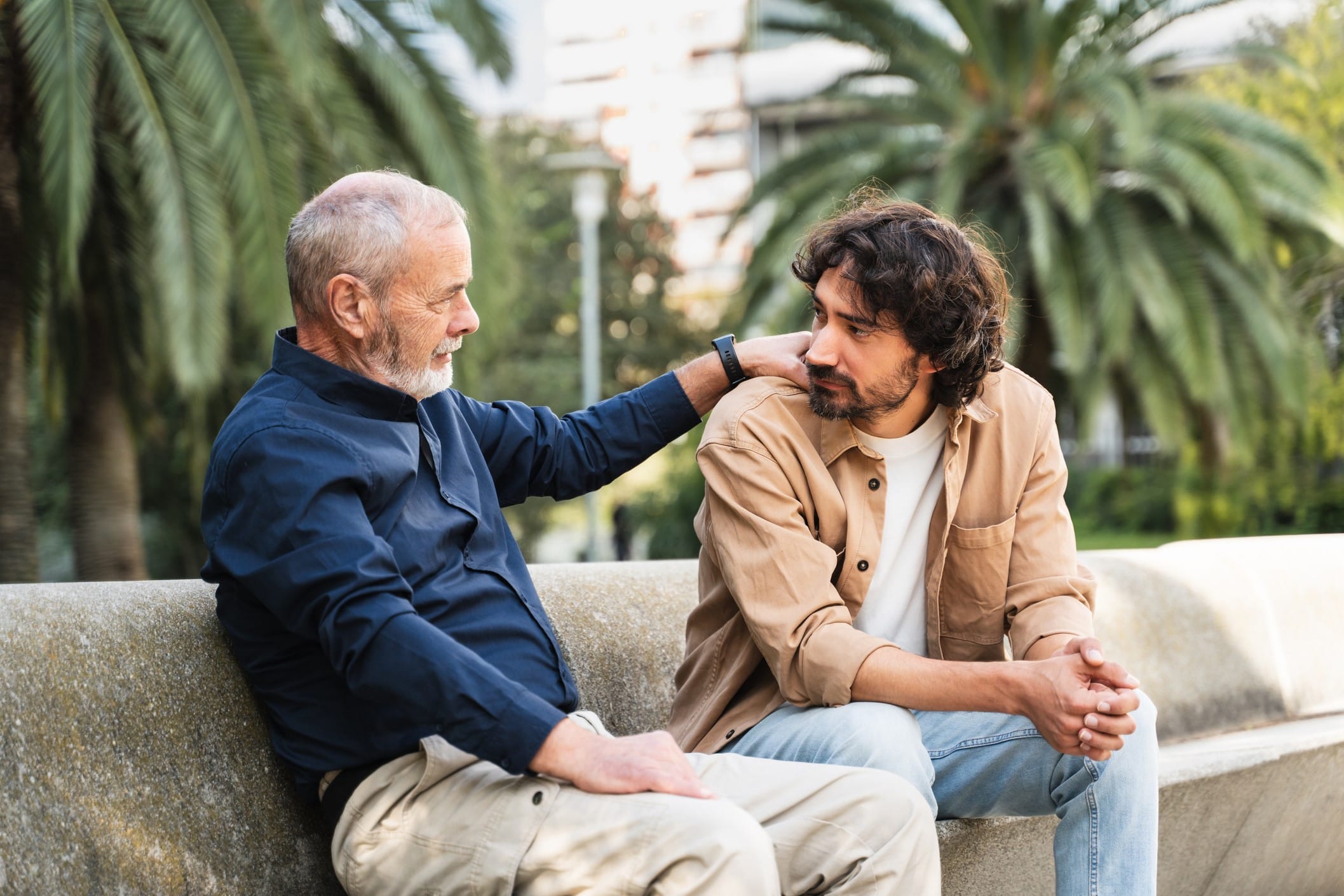
Sharing a cancer diagnosis is deeply personal. Some people feel ready to talk right away, while others may need time to process before they’re ready.
Keep in mind that there is no “right” way to tell others about your bladder cancer diagnosis. The best way is the one that feels most manageable and supportive for you.
Give yourself time to feel your emotions
Before telling anyone else, give yourself permission to absorb the news. You may feel shock, fear, anger or even numbness. These emotions can change from day to day. Taking time to understand what you want to share — as well as what you don’t want to — can make conversations feel less overwhelming.
You might begin by asking yourself a few questions: Who do I want to tell first? What kind of support do I need? How much detail do I feel comfortable sharing? Even a loose plan can help you feel more in control.
Choose who to share your diagnosis with
Many people start by telling their spouse or partner, and then sharing with close family members and trusted friends. These first conversations can feel the hardest because emotions are often strongest. Choose people who make you feel safe and supported.
It can help to keep your message simple at first. For example, you might say that you’ve been diagnosed with bladder cancer, that you’re working with your doctors on a treatment plan and that you will share updates when you’re ready. Remember that you don’t have to answer every question immediately.
You don’t need to tell everyone individually if you don’t want to, especially if you find repeating the conversation hard. It may be easier to gather family together for a conversation, or text your closest friends in a group chat.
If you work, you will likely need to share your diagnosis with HR or your manager, especially if you will be taking time away from work. You might want to tell your colleagues so they understand why you need support with practical needs, such as time off for appointments or flexible working hours. You don’t have to share more than is necessary to arrange these supports, however.
Remembering that you don’t need to tell everyone on the same day; whether you share your diagnosis over a week, a month or longer, you’re in control. Don’t be afraid to take a break if it becomes overwhelming.
Decide how much detail to share
Remember that you are in charge of your own story. Some people may want to share medical details openly, while others might prefer to keep conversations brief and private.
You might consider different levels of information depending who you’re talking to:
- A short version for acquaintances or colleagues.
- A slightly fuller version for friends.
- More detailed conversations for close loved ones.
Having a few prepared phrases can make repeated conversations easier and less draining. For example, you could say, “I’m still processing things, but I wanted you to know,” or “I’d prefer to keep details private for now.”
Read more about helpful links and resources for bladder cancer
Preparing for reactions and accepting support
People may respond in many ways, including concern, silence, tears or an outpouring of advice. It can help to remember that you are not responsible for managing everyone else’s emotions. If a conversation becomes overwhelming, it’s okay to pause or say you’d prefer to talk another time.
Sharing your diagnosis can also open the door to practical and emotional support, including meals, rides to appointments, childcare help or simply someone to listen. Accepting help can feel difficult, but it can also make a challenging time more manageable.
You may find that some friends offer more care and support than others. Long-time friends may go radio silent, while near-strangers will step up with support.
Above all, remember that telling others is a process. You can share information at your own pace, in your own words and change your mind at any time.
Sign up here to get the latest news, perspectives, and information about bladder cancer sent directly to your inbox. Registration is free and only takes a minute.